

Reviewed · CAIRO DINNER CRUISES
Best Package 4 Days to Giza, Cairo, Alexandria, Dinner Cruise
The biggest appeal here is simple: in four days, you cover the main sights of Cairo, Giza, and Alexandria without joining a large group. Your Egyptologist-trained guide gives the monuments a useful human story, while a private car handles the city traffic, long Alexandria run, and airport transfers.
I like two things right away. First, the route includes more than the usual pyramid photo stop, adding Saqqara and Memphis for a clearer view of how Egyptian pyramid building developed. Second, you get both a Nile dinner cruise and a full Cairo day with the Egyptian Museum and Khan Al-Khalili. The main drawback is the pace, especially Alexandria, which requires a long road journey and leaves limited time at each site.
Key details before you book
- Private touring for your group: You travel with your own guide and air-conditioned vehicle rather than following a large coach.
- Five major ancient sites in one day: Giza, Saqqara, Memphis, the Sphinx, and the Valley Temple form a packed but worthwhile route.
- Alexandria is a long day trip: The listed return transfer takes about three hours, so expect plenty of time on the road.
- Your hotel is not included: You choose and pay for accommodation in Cairo or Giza separately.
- Lunch is included each touring day: Drinks are extra, including at the fish restaurant and dinner cruise.
- Guide quality matters: Guides named in past bookings include Mariam, Menna, and Abdul, all praised for clear English, patience, organization, or helpful explanations.
What the $160 package really gives you
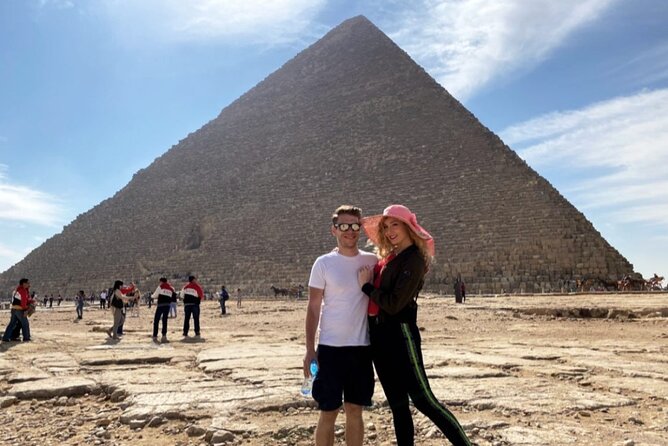
At $160 per person, this is not a standard all-inclusive holiday package. It is better understood as a private sightseeing and transport package spread over four days. You receive airport pickup, hotel transfers, a private air-conditioned vehicle, an Egyptologist guide, bottled water, daily lunches, and the Nile dinner cruise.
Your accommodation is left out. That lowers the package price and gives you control over where you sleep, but you need to arrange a hotel in Cairo or Giza before arrival. The package can also end at Cairo International Airport on Day 4, depending on your flight time.
The value is strongest if you are making a short first visit and want the major sights organized for you. Private transport is especially useful in Cairo, where moving between Giza, Saqqara, Memphis, the Citadel, and the museum can take much longer than a map suggests.
The price does not cover personal purchases, drinks, or hotel costs. The daily meals are full meals at local restaurants, with drinks excluded. The Alexandria lunch is at a modern fish restaurant with a sea view, which gives that day a pleasant break from archaeological stops.
Admission is listed for the main stops in the itinerary. Still, I would ask for a final breakdown before paying, especially if you want to enter special areas at the pyramids or add optional attractions.
More Four-Day Trips in Cairo:
Day 1: A useful airport arrival transfer
The first day is deliberately light. You are collected at Cairo International Airport and taken to your hotel in Cairo or Giza.
That sounds basic, but airport pickup matters in Egypt. After a flight, having someone meet you and take you directly to your accommodation removes the need to negotiate a taxi while tired. The booking information says confirmation is sent at the time of booking, so keep your arrival details and hotel address accurate.
This is not a sightseeing day. Use it to settle in, check the next morning’s pickup time, and keep your schedule flexible. The tour begins at 8:00 am, so a hotel in Giza may save some morning driving on the pyramid day, while a central Cairo hotel may suit you better for the museum and market.
Day 2: Giza, Saqqara, Memphis, and a Nile dinner
The second day is the strongest archaeological day in the package. It starts at the Giza Plateau, where you see the Great Pyramid area, the Great Sphinx, and the Valley Temple.
The Sphinx is more than a quick picture stop. Your guide can explain how the lion-bodied statue fits into the royal complex and why the nearby Valley Temple mattered. The Valley Temple was used for purification and for parts of the king’s mummification process, so it helps connect the famous monuments with the rituals that supported them.
Allow about three hours at Giza. That is enough for an introduction, though the plateau is large and the heat can make a long stop tiring. Wear practical shoes, carry water, and listen closely to your guide about where the vehicle will meet you.
Saqqara shows the pyramid story in progress
After Giza, you continue to Saqqara, home of the Step Pyramid of Djoser. Built in the Third Dynasty, it is widely presented as an important stage in the development of pyramid design.
This is one of my favorite parts of the route because Saqqara gives you more context than Giza alone. The smooth-sided pyramids at Giza can look like a finished idea. The Step Pyramid helps you see an earlier stage in that process.
The planned visit lasts about two hours. Ask your guide to point out how the design differs from the later pyramids. That comparison makes the stop far more useful than simply collecting another monument photo.
More evening sailings around Cairo worth a look
- Cairo: Dinner Cruise on the Nile River with Entertainment
★ 4.2 · 2,190 reviews - Cairo: Nile Sunset Dinner Cruise, Show & Optional Transfer
★ 4.1 · 2,184 reviews - Cairo: Nile Dinner Cruise with Belly Dancer Show with Pickup
★ 4.4 · 835 reviews - Giza pyramids, Sphinx, ATV bike, Lunch,Camel ride, Dinner cruise& shopping tour
★ 5.0 · 798 reviews
Memphis adds the old capital
Lunch comes between the sightseeing stops at a local restaurant. It is a full meal, but drinks cost extra.
After lunch, you visit Mit Rahina, the site of ancient Memphis. The area is known for the colossal statue of Ramses II and the large alabaster sphinx. Memphis dates to about 3100 BC, making it an important stop for understanding the political center that supported early Egyptian civilization.
The museum visit takes about an hour. It is shorter and more focused than the Egyptian Museum in Cairo, which suits a busy day. The combination of Memphis, Saqqara, and Giza gives you three different ways to understand ancient Egypt: royal monuments, architectural development, and an early capital.
The dinner cruise is a change of pace
The evening ends with a three-hour Nile dinner cruise. The program includes a meal, belly dancing, whirling dervish, or tannoura, performances, and Arabic and English music. Wine or beer may be available as an option.
This is a polished evening rather than a quiet view from the riverbank. You should expect entertainment as part of the meal. After a full day in the sun, that change of pace can be welcome, though anyone seeking a calm, food-focused dinner may find the show program a little much.
The cruise is listed as a five-star dinner, but the package details do not define a specific vessel or seating arrangement. Ask for those details if the quality of the dinner matters greatly to you.
Day 3: Alexandria’s Roman remains and Mediterranean setting
Alexandria is the most demanding day. You leave Cairo after hotel pickup, travel to the coast, tour several sites, eat lunch, and return to Cairo. The listed return transfer takes about three hours, so this is a full road day.
I would choose this day because Alexandria adds a different layer to Egypt. Giza and Saqqara focus on pharaonic Egypt. Alexandria brings in Greek, Roman, and later Mediterranean history.
Kom el Shoqafa leads underground
The first stop is the Catacombs of Kom el Shoqafa, a Roman-era cemetery cut into the rock with three levels. The visit takes about an hour.
The catacombs are notable because they reflect a mix of traditions rather than a single period in isolation. Your guide can help you read the site as a working burial complex, not just a series of underground rooms. The steps and enclosed setting may not suit every visitor, and you should allow extra care if you are uncomfortable in tight spaces.
The Roman amphitheater and Pompey’s Pillar
Next comes Alexandria’s Roman amphitheater, with displays of monuments found underwater near the city. A separate stop includes a photo opportunity by Pompey’s Pillar, built during the reign of Emperor Diocletian in the fourth century.
The amphitheater is a compact stop, planned for about an hour. It works well after the catacombs because the day moves from underground burial architecture to public Roman life.
Pompey’s Pillar is listed as a photo stop, so do not expect an extended visit there. This is a good example of why you should read the day as an introduction to Alexandria, not as a full archaeological study.
The Bibliotheca Alexandrina and Qaitbay
The modern Library of Alexandria follows, with about two hours planned. The tour includes the open court and a statue of Alexander found underwater nearby.
The library is a modern building connected to the memory of the ancient library. It gives the day a needed change in tone, especially after the Roman sites. If you are interested in architecture, public institutions, or the way modern Alexandria presents its past, this may be one of the most engaging stops.
Lunch is at a modern fish restaurant with a sea view. Drinks are not included. That meal should help break up the long day and gives you a chance to eat local seafood in a setting tied to Alexandria’s coastal identity.
The final sightseeing stop is the exterior of Qaitbay Castle, built on the site associated with the ancient Lighthouse of Alexandria. The itinerary specifies an outside visit, so you should not assume entry to the castle itself.
At the end of the day, you return to your Cairo or Giza hotel. This is where the schedule can feel tight. One past booking had a disappointing Alexandria day because of the long drive and limited sightseeing time, and that is a fair warning. If Alexandria is your top priority, consider asking about an overnight stay or a slower private arrangement.
Day 4: The Citadel, Egyptian Museum, and Khan Al-Khalili
The final full touring day focuses on Islamic Cairo and ancient Egyptian collections.
You begin at Salah El Din Citadel, constructed by Salah El Din in 1183. Inside the citadel, you visit the Mosque of Muhammad Ali, also called the Alabaster Mosque.
The mosque is one of Cairo’s best-known landmarks, with a strong position above the city. Your guide’s explanation is useful here because the citadel is not only a viewpoint. It is part of Cairo’s defensive and political story, while the mosque reflects a later period and a different style from the pharaonic sites.
Plan about two hours for the citadel and mosque. Dress respectfully, and expect to remove shoes if required inside the mosque. The exact visit rules can vary, so follow your guide’s instructions.
The Egyptian Museum needs time
The Egyptian Museum is scheduled for three hours, making it the longest indoor stop of the package. That is sensible. The collection is large, and a guide can help you avoid wandering from case to case without a plan.
The Egyptologist provides a private introduction to important objects, including treasures linked with Tutankhamun. Ask your guide to shape the visit around your interests. Three hours is enough for a strong overview, but not enough to see every room closely.
Lunch comes after the museum at a local restaurant. Again, the full meal is included and drinks are extra.
Khan Al-Khalili ends the trip with street life
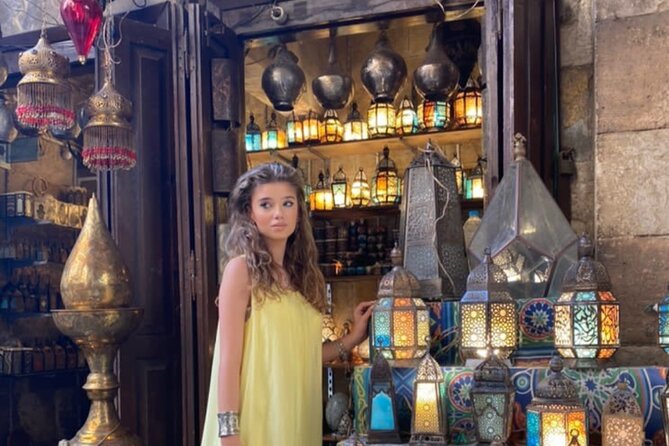
The day finishes at Khan Al-Khalili, Cairo’s famous souk. You can browse shops, see traditional coffeehouses, and stop at Fishawi’s, a well-known coffeehouse established in 1773. Arabic coffee and shisha are part of the setting, though purchases and refreshments are personal expenses.
Give yourself room to enjoy this stop without treating it as another checklist item. The market is a place to browse, bargain, and notice daily Cairo life. Keep your belongings secure and agree on a meeting point with your guide, especially if you want time to look around independently.
After the market, you are transferred to your hotel or Cairo International Airport. The final transfer depends on your flight booking, so do not schedule an early departure without confirming the timing.
What guide quality can change
The guide is central to this package. The included guide is Egyptologist-trained, and the best moments depend on clear explanations rather than transport alone.
Mariam was praised for being attentive and consistently satisfying the needs of her group. Menna was described as fluent in English and well organized, with easy coordination across the four-day visit. Abdul was praised for patience, helpfulness, and clear historical explanations in fluent English.
These names come from individual bookings, so you should not assume one of them will be assigned to you. You can, however, request an English-speaking guide and tell the operator what matters most, such as archaeology, photography, family pacing, or museum objects.
Because the tour is private, you have more room to ask questions and adjust the rhythm than you would on a large group excursion. That is a real advantage at the museum and Saqqara. It does not remove Cairo traffic or shorten the Alexandria road journey.
Who will get the most from this four-day plan
This package suits you if you want a first look at Egypt’s major sights without planning every transfer yourself. It is also a good fit if you prefer private touring, want an Egyptologist at the monuments, and are comfortable arranging your own hotel.
You will likely appreciate it most if:
- You have only four days in the Cairo area.
- You want Giza plus less obvious sites such as Saqqara and Memphis.
- You want Alexandria included without arranging a separate car.
- You value airport and hotel transfers.
- You are happy with full touring days and limited free time.
It may not suit you if you want a slow holiday, dislike long road transfers, or expect a fully inclusive package with lodging and drinks. Alexandria is the main pressure point, and the itinerary leaves little spare time if traffic delays the return.
The tour is private, but it is not fully flexible by default. The information says extra tours can be added if you have more days, so ask about changes before booking rather than assuming the schedule can be reshaped on the day.
Cancellation is free up to 24 hours before the start time for a full refund. Changes or cancellations inside that window are not accepted for a refund. Most people can take part, service animals are allowed, and the tour is near public transportation, though the operator provides private vehicle transfers.
Should you book it?
Book this four-day package if you want the major Cairo sights, a taste of Alexandria, and a guide to make sense of what you are seeing. The combination of Giza, Saqqara, Memphis, the Egyptian Museum, and Khan Al-Khalili gives you a strong introduction, while the private car and airport transfers remove much of the planning work.
Before you commit, confirm your guide language, hotel pickup details, admission coverage, dinner cruise arrangements, and the exact Alexandria timetable. If you accept the packed schedule and arrange your own hotel, $160 per person offers solid value for a private introduction to Cairo and its two major day-trip areas.
FAQ
Is hotel accommodation included?
No. You choose and pay for your own hotel in Cairo or Giza.
Does the package include airport pickup?
Yes. Day 1 includes pickup from Cairo International Airport to your hotel, and Day 4 can include transfer to the airport depending on your flight booking.
Is this a private tour?
Yes. Only your group participates in the private activity.
What time does the tour start?
The stated start time is 8:00 am.
Are meals included?
Lunch is included on the touring days, with full meals at local restaurants. Drinks are not included. The package also includes the Nile dinner cruise.
Is transportation provided?
Yes. The package includes private transportation in an air-conditioned vehicle, along with hotel and airport transfers.
Does the tour visit Saqqara and Memphis?
Yes. Day 2 includes the Step Pyramid at Saqqara and the ancient capital of Memphis at Mit Rahina.
How long is the Alexandria day?
The Alexandria sightseeing stops include the Catacombs of Kom el Shoqafa, Roman amphitheater, Pompey’s Pillar photo stop, Bibliotheca Alexandrina, lunch, and the outside of Qaitbay Castle. The return transfer to Cairo is listed as about three hours.
Can I cancel for a full refund?
Yes, if you cancel at least 24 hours before the experience start time. Cancellations or changes made less than 24 hours in advance are not refunded.
Newly listed sailings around Cairo
- Dinner Nile Cruise belly dancer open buffer tanora show sailing on Nile★ 5.0 · 9 reviews
- night-tour Nile dinner cruise with open buffet and belly dancer★ 5.0 · 9 reviews
- Cairo Dinner Cruise show with belly dancer show on Nile river★ 4.5 · 20 reviews
- Cairo dinner Nile cruise with belly dancer show on Nile river★ 5.0 · 2 reviews
- 2-hours night dinner cruise show : Eat , Dance and Sing★ 4.5 · 20 reviews
- VIP Private Tour Giza Pyramids ,Nile Dinner Cruise&Pyramid Inside★ 5.0 · 3 reviews
- Dinner Cruise on the Nile with Show from Cairo and Giza★ 4.5 · 6 reviews
- Tour Giza Pyramid Camel Ride ATV and Nile Dinner Cruise★ 5.0 · 4 reviews
Cairo Dinner Cruises, compared.
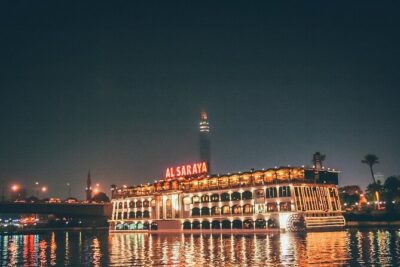
Dinner Cruise on the Nile River with Entertainment
Read our review →
Nile Sunset Dinner Cruise, Show & Optional Transfer
Read our review →
Nile Dinner Cruise with Belly Dancer Show with Pickup
Read our review →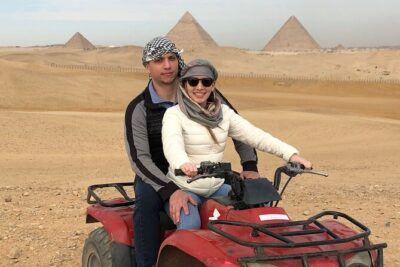
Giza pyramids, Sphinx, ATV bike, Lunch,Camel ride, Dinner cruise& shopping tour
Read our review →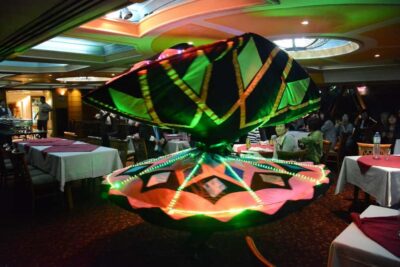
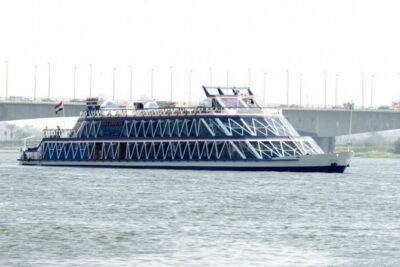

Giza Pyramids,Sphinx,Camel Ride,ATV Bike,Shopping, Dinner cruise
Read our review →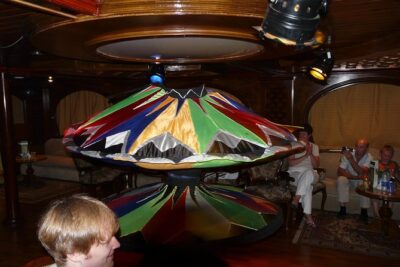
ViP Private Effective Nile River Dinner Cruise in Cairo
Read our review →Browse the lists this tour appears in